About Us
Advocacy
Championing our communities
As part of our mission and vision, Adventist Health partners with community leaders, organizations and media outlets to drive policies that ensure equity, patient rights, and access to quality care across all the communities we serve — rural and urban. Our public affairs team spearheads this work through education, public relations, coalitions, and regular meetings with policymakers.
Policy priorities
Leveraging the strength of Adventist Health – including its leaders, geographic footprint, and delivery system innovations – our advocacy program effectively influences public policies to protect and build the safety-net and rural health system.
Protect and strengthen the safety net and supplemental funding
- Protect Medicare and the Medicaid supplemental safety net.
- Preserve the Affordable Care Act exchanges.
- Explore policies that aim to create sustainable funding for the healthcare safety-net.
- Protect 340B Drug Pricing Program.
Ensure access and sustainability
- Promote policies to protect individuals from being underinsured and uninsured.
- Advocate for payment innovation and delivery reform to improve healthcare efficiency, promote value-based care, and ensure better access to high-quality services while reducing overall costs.
- Promote discussions on commercial payer fairness to ensure equitable reimbursement rates, reduce disparities in payment practices, and support the financial sustainability of healthcare providers serving diverse patient populations.
- Remove barriers to integration and clinical networks of care.
- Advocate against site-neutral policies.
- Improve access to mental health resources.
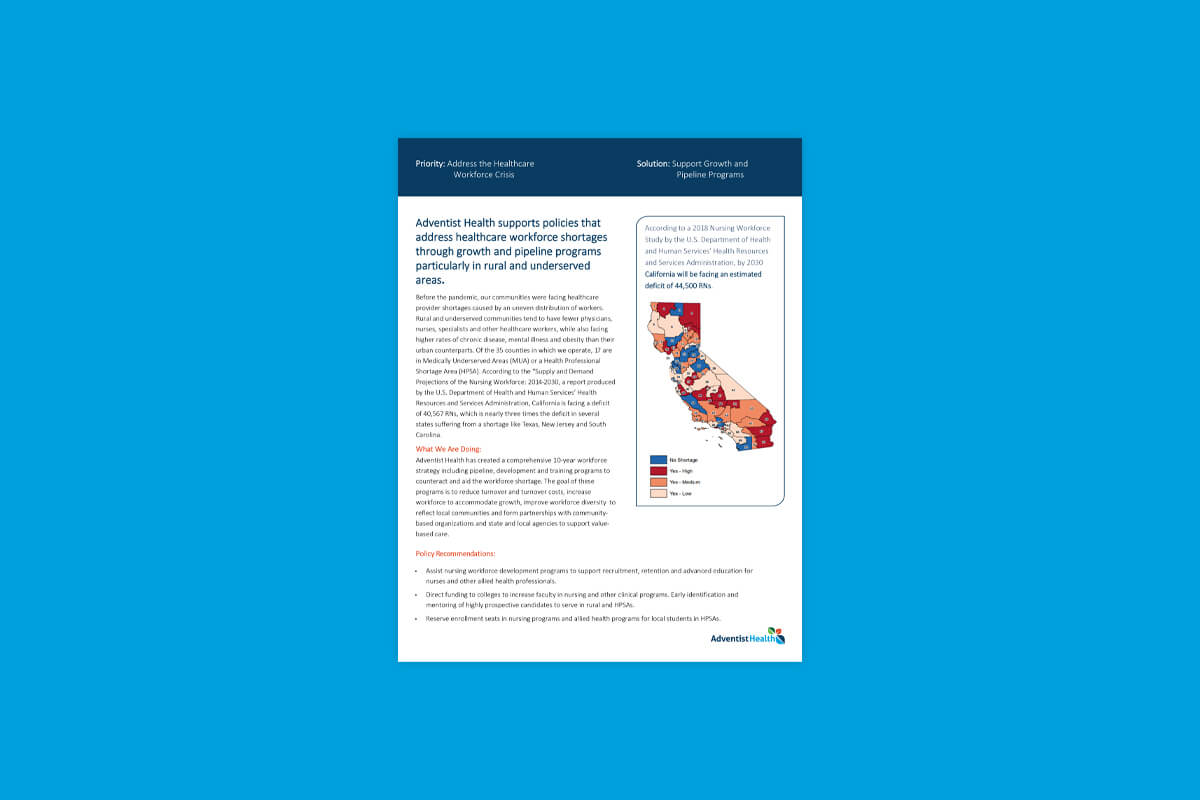
- Encourage growth and pipeline programs to develop a diverse and skilled workforce to meet future healthcare demands.
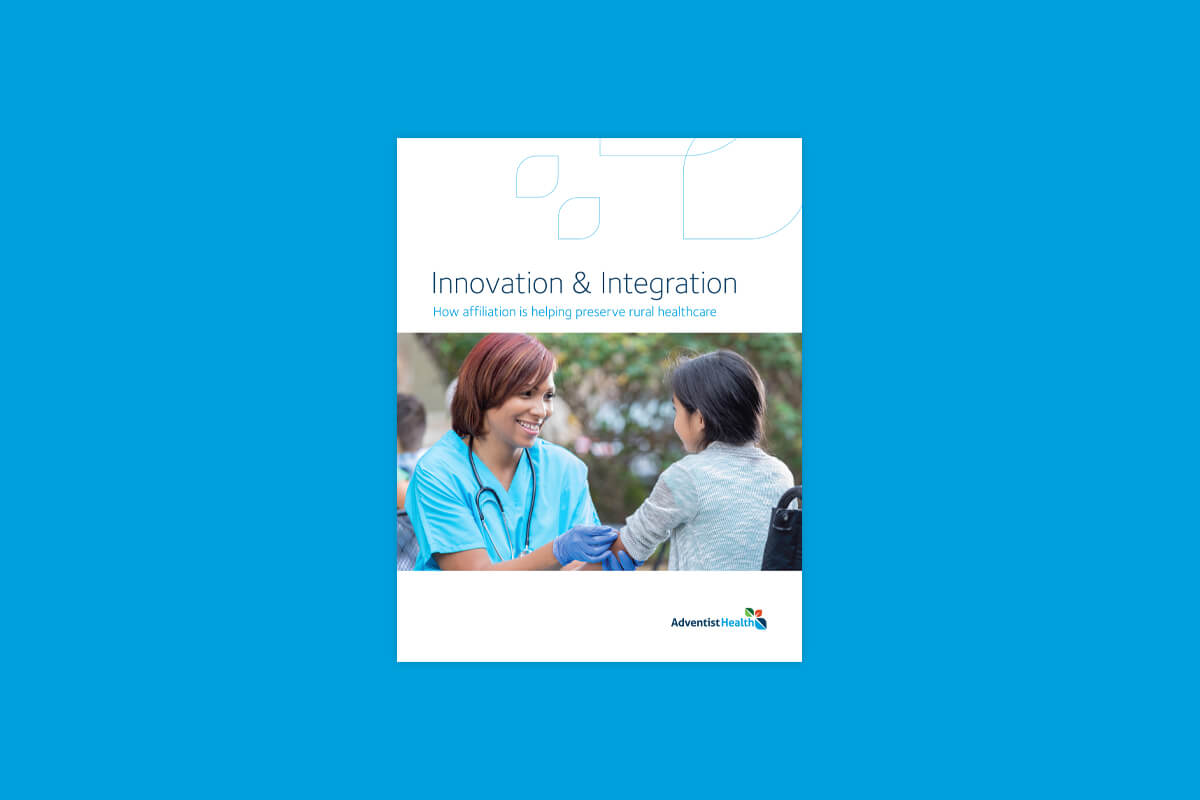
Preserving rural health
- Preserve Critical Access Hospitals and rural hospitals.
- Secure stability and expansion of rural health clinics.
- Promote new rural health models.
- Support new and established physician residency programs in rural health.
- Bolster rural pipeline programs.
Supporting our communities through the 340B Program
The 340B Drug Pricing Program is a Health Resources & Services Administration program that helps eligible hospitals and clinics like those operated by Adventist Health keep healthcare services available in underserved areas. Savings from the 340B Program help ensure care stays local and that small towns and rural communities can continue accessing essential services close to home.
What is the 340B Drug Pricing Program?
Simply put, the 340B Drug Pricing allows certain hospitals and clinics to buy medications at a discount. Drug companies that take part in Medicaid must sell certain medication to these hospitals and clinics at a lower price.
Organizations that are eligible to participate in the 340B program include:
- Community Health Centers Hospitals that care for low-income patients
- Children’s hospitals
- Other health organizations that serve vulnerable populations.
Once enrolled in the program, the healthcare organization must follow all rules and use their special 340B ID number to receive the discount. Drug vendors must also check this ID before selling medicines at the discounted price.
What role does the 340B Program play at Adventist Health?
At Adventist Health, we believe that access to healthcare should never depend on geography or income. Most of the communities we serve are rural or located in an area designated as a Health Professional Shortage Area by the Health Resources & Services Administration. We work to bridge these gaps by providing essential services, expanding telehealth capabilities, and focusing on supporting community programs to address the community's health needs. Our goal is to ensure that every individual has access to the care they need to live a healthier, more fulfilling life.
The 340B Program plays a vital role in helping Adventist Health extend this important care to our communities. Savings from the 340B Program allow us to reinvest in programs such as medication assistance for patients who struggle to afford prescriptions, community health initiatives like mobile care vans, and expanded access to specialty care in rural areas, including cancer centers. By leveraging 340B savings, we can improve health outcomes for underserved communities.
Does the 340B Program cost taxpayers?
No, the 340B Program does not use taxpayer dollars. It is funded entirely through discounts provided by pharmaceutical companies.
The federal government does not pay hospitals who participate in the 340B Program or spend money to operate it. Instead, it sets the rules that require drug companies to offer lower prices to qualifying hospitals and clinics.
Without 340B savings, our communities are at risk of losing access to the healthcare services they rely on. Adventist Health would be forced to reduce services, creating challenges for the most vulnerable members of the community. These individuals are at the heart of our advocacy work, and the 340B Program plays an important role in our ability to serve them.