Health & Wellness
Inside the Cath Lab: Where Seconds Can Save a Heart
Mar 17, 2026
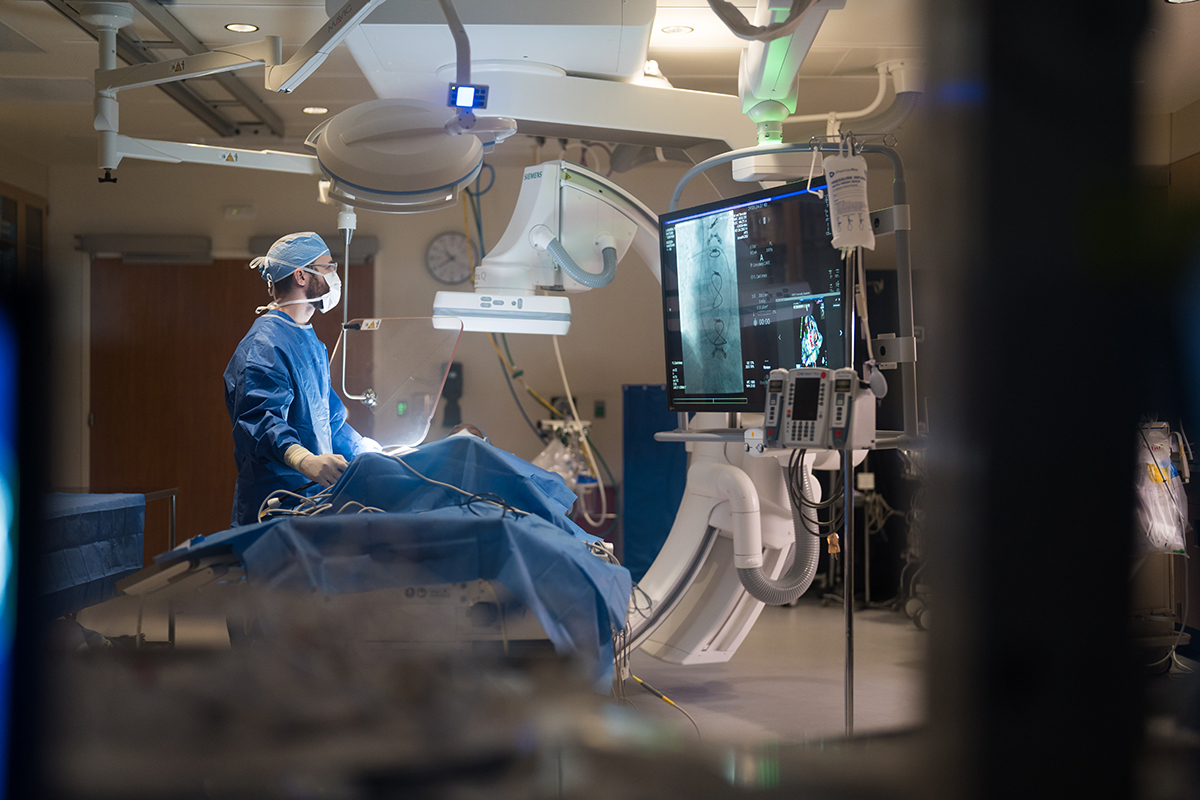
When someone is having a heart attack, every second matters. The faster doctors can restore blood flow to the heart, the more heart muscle can be saved. But speed alone isn’t enough, patients also need expert care and advanced technology.
At Adventist Health Northwest Heart Center, our cardiac catheterization lab, often called a cath lab, was designed to deliver both. This specialized space allows heart experts to diagnose and treat serious heart problems using minimally invasive procedures that can restore blood flow quickly and safely.
What is a cath lab?
A cath lab is a procedure room where doctors diagnose and treat heart and blood vessel conditions. Instead of open-heart surgery, physicians guide a thin, flexible tube called a catheter through a blood vessel, usually from the wrist or groin, to the heart.
Using advanced imaging equipment, doctors can see the heart and arteries in real time. If they find a blockage or another problem, they can often treat it right away.
Common procedures performed in a cath lab include:
- Opening blocked arteries during a heart attack
- Placing stents to keep arteries open
- Diagnosing coronary artery disease
- Treating certain heart defects
- Repairing some heart valve problems
These minimally invasive procedures often allow patients to recover faster than traditional surgery.
Designed for speed when every minute counts
Our cath lab was built to help heart teams act quickly during emergencies.
The hospital’s helicopter pad sits directly above the cath lab and emergency department, allowing patients to move quickly from air ambulance to treatment. Patients arriving through the emergency room also have fast access to the cath lab, reducing delays when every minute matters.
Speed is especially important during a heart attack. The American College of Cardiology recommends a door-to-balloon time of 90 minutes, the time between a patient arriving at the hospital and a blocked artery being opened.
At Adventist Health Northwest Heart Center, our average door-to-balloon time is under 70 minutes, helping patients receive life-saving treatment as quickly as possible.
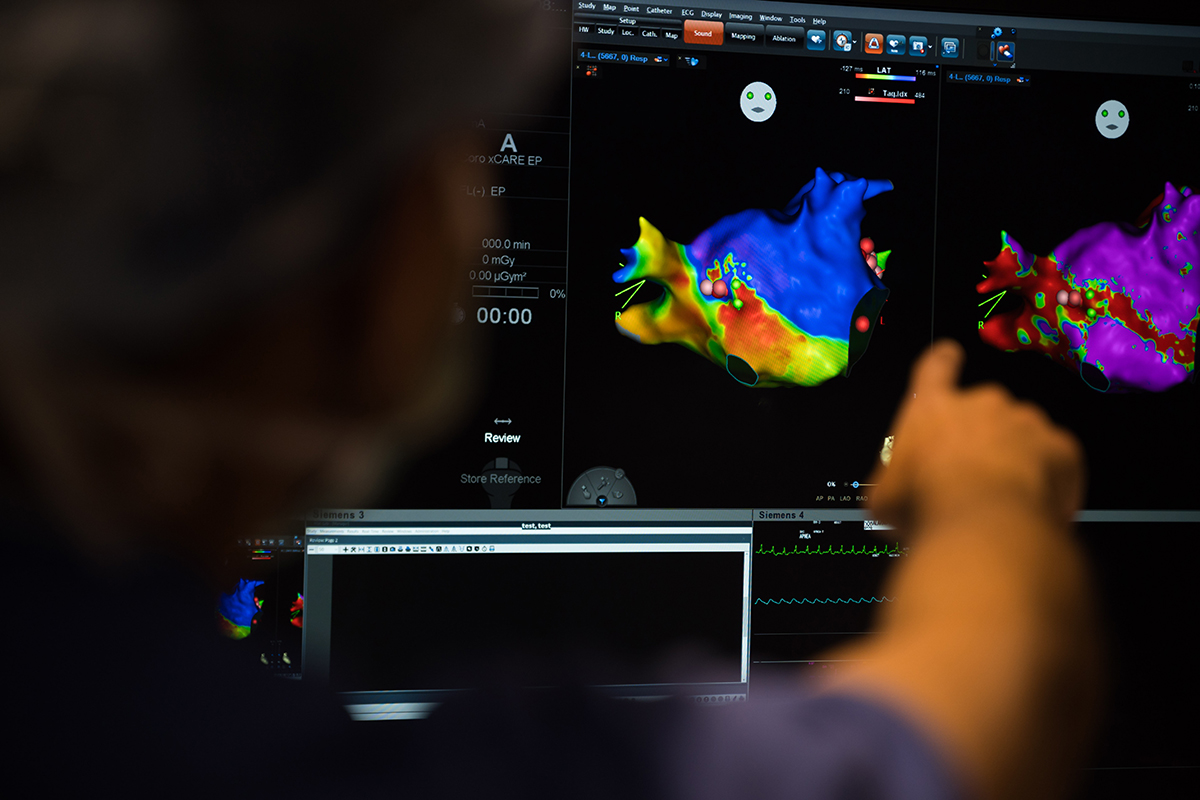
A team member reviewing a 3-D cardiac mapping image during a catheter-based heart procedure in the cath lab.
Advanced technology for heart care
Cath labs contain specialized technology that helps doctors see and treat heart problems with great accuracy.
Our lab includes advanced imaging systems that allow physicians to view blood vessels and guide procedures safely. This includes updated Siemens imaging equipment designed to provide clear images while reducing radiation exposure.
Other technologies used in our cath lab include:
- Intravascular ultrasound (IVUS) to see inside arteries
- Instant wave-free ratio (IFR) to measure blood flow
- Rotational angiography with CT overlay for detailed 3-D imaging
- A dedicated interventional radiology suite with 4-D imaging
These tools help doctors diagnose complex heart problems and guide treatment with precision.
A team built for heart emergencies
Technology is only part of what makes a cath lab effective. Skilled specialists are essential.
Our cath lab is staffed by interventional cardiologists, doctors trained to diagnose and treat heart disease using minimally invasive techniques. They work alongside specially trained nurses and technologists who focus on cardiac care.
“A modern cath lab allows us to diagnose and treat heart problems in real time,” says Fawaz Alhuamid, MD, medical director of Adventist Health Northwest Heart Center and an electrophysiologist. “With the right technology and team, we can restore blood flow quickly and help prevent serious heart damage.”
In addition to our flagship cath lab in Portland, diagnostic cath lab services are also available at our McMinnville location, helping expand access to heart care across the region.
Together, advanced technology, fast emergency access and expert care allow our cath lab to deliver the life-saving heart treatment our community depends on.