Patient Story
Sisters Face Inherited Cancer Risk and Find a Way Forward
Oct 30, 2026
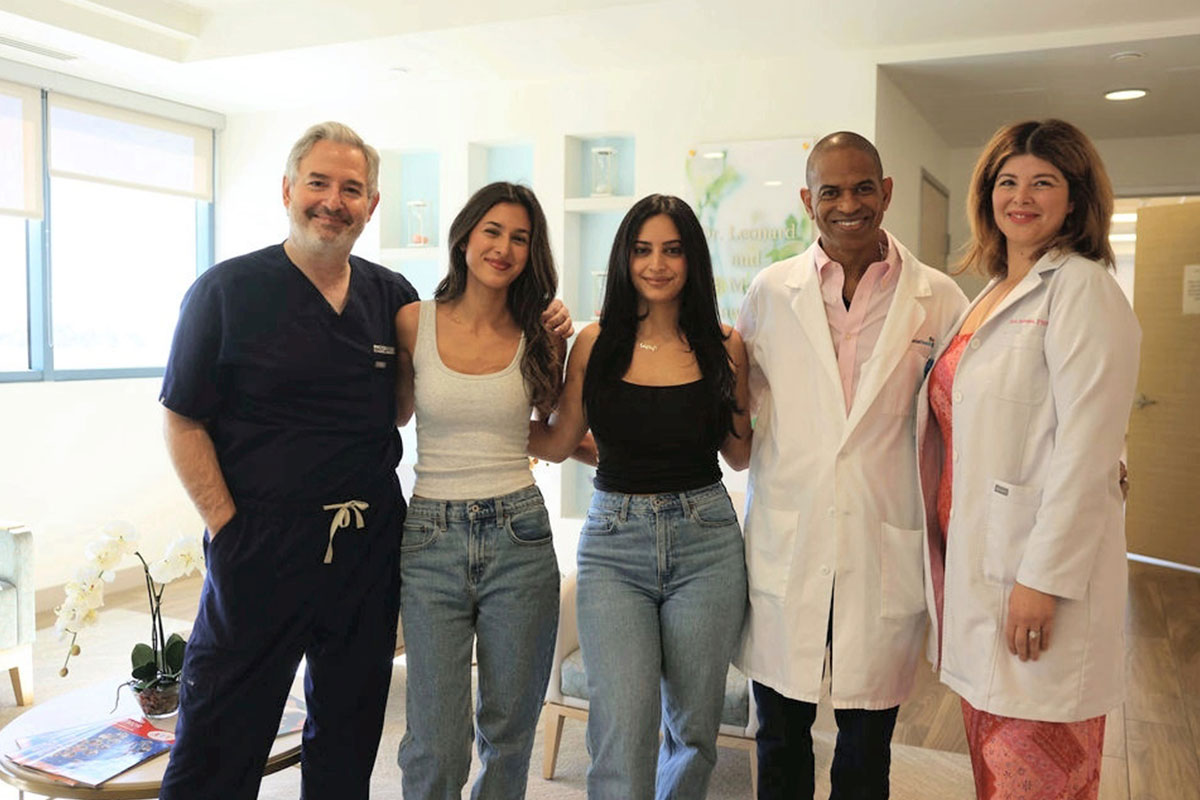
After learning they both carry a BRCA2 mutation, two La Crescenta sisters chose preventive surgery at Adventist Health Glendale. Their experience is opening conversations about family history, breast reconstruction, and the power of knowing your risk.
A shared journey, in their own words
When Natalie Armenian walked down the aisle at her wedding, she could hardly hold back tears. A few years earlier, her father had been diagnosed with pancreatic cancer, and she feared he might never see this day. But he was there. Natalie and her sister, Jacqueline, knew how differently the celebration could have unfolded.
His diagnosis had also changed their own futures. Genetic testing showed that their father carried a BRCA2 mutation, an inherited change that can increase the risk of several cancers. Both sisters tested positive. Neither had breast cancer, yet each chose a preventive double mastectomy, followed by reconstruction with implants. Their surgeons also performed Resensation, a nerve graft procedure intended to help restore feeling after mastectomy.
Jacqueline underwent surgery in March 2025. Natalie followed in May.
Their decisions were shaped by memories of a grandmother who had helped raise Natalie and later died after breast cancer returned. “It’s not like you ever move past it. You just learn to live with it,” Natalie says. Knowing their own risk gave the sisters a chance to act, but it also meant considering the loss of healthy breasts and changes to their bodies before either had become ill. Natalie had spent years honoring her grandmother’s memory. She had never imagined that the history she was trying to keep alive would one day shape such an intimate decision of her own.
The family history behind the choice
Their father’s diagnosis in 2021 led to testing that revealed a pattern of breast and ovarian cancer on his side of the family. Dennis Holmes, MD, breast surgical oncologist and medical director of Adventist Health Glendale’s Sam and Grace Carvajal Comprehensive Breast Center, says a family history that spans relatives, generations, and types of cancer can warrant a conversation about genetic counseling. Inherited risk can come from either parent.
A BRCA2 result does not prescribe a single course of action. Dr. Holmes discussed closer surveillance and risk-reducing surgery with the sisters, including what each option could mean over a lifetime. For women in their 20s, he says, those decisions intersect with work, relationships and family planning. The timing must reflect the individual. A positive result was information they could use, rather than a prediction of when, or whether, either would develop breast cancer.
Natalie and Jacqueline faced the same result differently. Jacqueline had never had surgery. She worried about recovery and whether she would feel like herself afterward. Natalie, newly engaged and remembering her grandmother's illness, feared what waiting might bring. Both understood that removing their breasts could affect sensation and their ability to breastfeed if they had children. Neither could decide for the other. Choosing surgery meant accepting pain, time away from daily life, and a body that might never feel quite the same. Choosing surveillance meant living with the uncertainty that had shadowed their family for years. The sisters talked through those possibilities together, even as their answers took shape at different speeds.
Jacqueline took time away from work to think, then returned to her doctors ready to proceed. Natalie watched her younger sister go through surgery and early recovery before making her own choice. In the months before her wedding, the thought of building a future family made that choice feel especially urgent. Peter Ashjian, MD, their plastic and reconstructive surgeon, saw how their bond carried them through: “Each one was a motivation for the other.”
A shared recovery journey
Dr. Holmes and Dr. Ashjian planned nipple-sparing mastectomies and staged reconstruction together. At the time of surgery, tissue expanders were placed; over subsequent visits, they were filled gradually. Each sister later had another procedure to replace the expanders with implants. That sequence gave their skin time to heal and let them participate in decisions about the final size and shape of their breasts.
"The number one thing is having the right team that's committed to breast reconstruction or breast surgery," said Dr. Ashjian. The surgeons coordinated the incisions, reconstruction, and nerve grafts before surgery and throughout follow-up care at the comprehensive breast center.
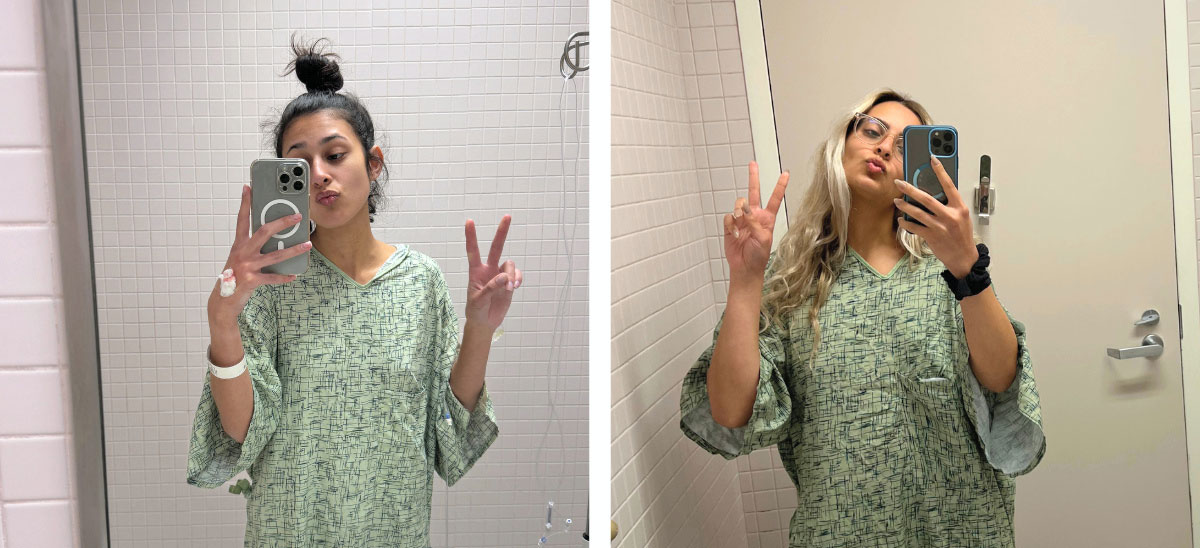
At home, recovery was less abstract: drains to empty, appointments to manage, help getting out of bed or taking a shower. Jacqueline needed an additional operation after a hematoma developed shortly after her mastectomy. Natalie, squeamish about medical care, learned to empty her sister's drains. Soon they were navigating much of the same routine together. Each could see in the other the exhaustion that might be hard to describe to anyone who had not experienced it. Their closeness also let them be frightened, frustrated, or relieved without softening the truth.
“We’re our own support group,” Jacqueline says. She had shown Natalie what the difficult days could look like; Natalie could offer the reassurance of someone who understood the choice without needing it explained. Their surgeries were separate, but recovery often felt shared.

Rebuilding more than appearance
Even after reconstruction, a breast can look familiar while feeling different. Mastectomy may disrupt nerves that supply sensation. Resensation uses nerve grafts to provide a pathway for nerves to regrow. Dr. Holmes and Dr. Ashjian incorporated the procedure into the sisters’ surgical plans. Any return of sensation takes time and varies from person to person. Nipple-sparing surgery preserved the sisters’ nipples and surrounding skin, but it could not by itself preserve the nerves affected when breast tissue was removed. The nerve grafts addressed a part of recovery that is easy to overlook when attention is focused on how reconstruction will look.
The sisters describe tingling, occasional feeling, and areas that remain numb. They compare what they can sense and sometimes laugh at unexpected discoveries. Natalie is grateful for how her reconstruction looks, while candid about the scars and changes it brought. For Dr. Ashjian, considering how a reconstructed breast feels is part of caring for the whole person, not just restoring its shape.
Speaking openly to inspire others
Jacqueline has shared practical observations about recovery through social media. People preparing for mastectomy have reached out with questions or told her the videos helped them feel less alone. Natalie hopes their experience encourages families to talk openly, including about cancer on a father’s side. Their father’s testing gave them information they might otherwise have missed. They cannot change their family history, but they can share what that knowledge changed for them. She thinks about what she might someday tell a daughter facing similar questions.
The sisters know that someone else might choose surveillance, surgery, or more time to decide. What matters to them is having the information and support to make that choice. "I'm okay with being an example if it helps someone else," Natalie says.
Cancer in your family?
Start with a conversation. The Sam and Grace Carvajal Comprehensive Breast Center at Adventist Health Glendale offers consultations and genetic testing to help patients understand inherited cancer risk, with referrals for genetic counseling when appropriate.
Call 818-409-8215 to schedule a genetic testing consultation and discuss the next step for you and your family.