Philanthropy, Patient Story,
A Second Chance to Give Back: David's Story
Nov 23, 2026
Every Tuesday morning, visitors walking through the doors of Adventist Health Twin Cities are greeted by David's warm smile. For the past two years, he has faithfully served as a volunteer, welcoming patients, families, and visitors with kindness and compassion. What many may not realize is that more than 20 years ago, those same doors became the starting point of a fight for his life.
A night that changed everything
In September 2005, David was a 40-year-old husband and father raising two young children with his wife, Gwen. Their son, Nolan, was just 8 months old, and their daughter was only 3 years old. Life was busy, full of family responsibilities and plans for the future.
Then, in the early hours of September 11, everything changed.
David woke up around 2 a.m. with the feeling that something was wrong. Disoriented and unable to understand what was happening, he went looking for Gwen.
"I tried to tell her I didn't feel right," David recalls. "I thought I was speaking normally, but I was really just mumbling."
At first, Gwen thought he was joking. But as she followed him into the living room, David suddenly collapsed.
When he could no longer respond, she immediately called 911.
Looking back, David credits that moment with saving his life.
"If I hadn't made it to Gwen that night, I would not be here today," he says.
Paramedics rushed David to Adventist Health Twin Cities, where the emergency team quickly recognized the signs of a serious medical emergency. A CT scan revealed a massive brain bleed caused by an aneurysm. Within a short time, David was transferred to Adventist Health Sierra Vista, where he underwent emergency brain surgery.
Fighting back after stroke
The procedure saved his life, but it marked the beginning of an extraordinary recovery journey.
"After surgery, I felt like I was at ground zero," David says. "I couldn't talk, walk, move, or see straight."
In the days that followed, he remained in intensive care before beginning months of rehabilitation. He worked through therapies focused on speech, vision, and mobility. At times, he relied on a wheelchair and had to relearn many of the tasks most people take for granted.
Despite the challenges, David remained determined.
"My son was only 8 months old and my daughter was 3," he says. "I had to learn how to live my life again. I had to be there for my family."
The people he never forgot
While much of his hospitalization has faded from memory, there are two caregivers he has never forgotten.
"I remember two nurses in the ICU, Angela and Gloria," he says. "They are so special to me because of how much they cared for me."
A recovery still in progress
Recovery was not measured in days or weeks. It took years of perseverance, determination, and support from family, friends, and healthcare professionals.
Today, at 62 years old, David understands just how fortunate he is.
"Only about 20% of people survive the kind of stroke I had," he says. "I'm lucky to be alive."
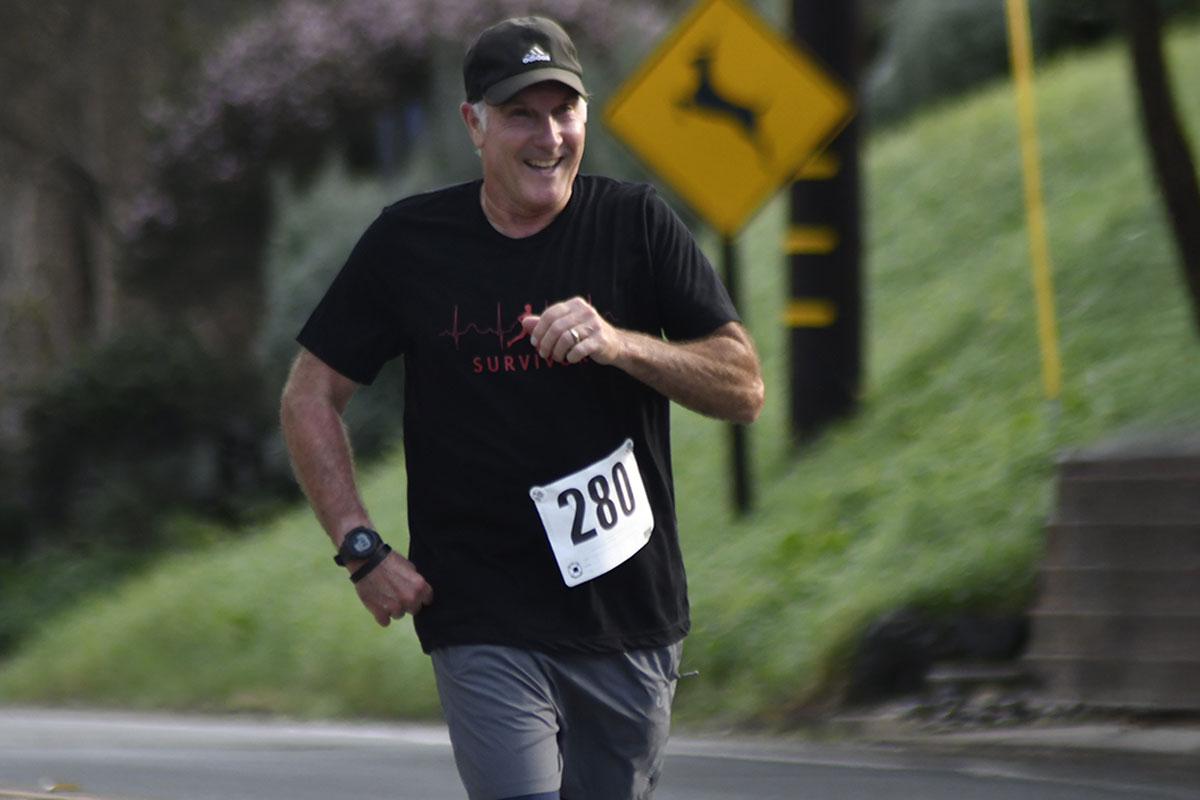
His recovery continues even now. Some days are easier than others, but he remains committed to staying active and pushing himself forward. Earlier this year, he completed the Buzz Half Marathon at Fort Hunter Liggett, something that would have seemed impossible during those early days after surgery.
"It comes in waves," David says of his recovery. "But I'm so happy to be alive."
Giving back to the community
As the years passed, David found himself wanting to give something back to the community that had supported him through one of the most difficult experiences of his life.
He began attending the Stroke Support Group at Adventist Health Twin Cities, where he connected with fellow survivors and families navigating similar journeys. Eventually, he asked how he could become more involved.
The answer was simple: become a volunteer.
Today, David volunteers regularly at Adventist Health Twin Cities, offering encouragement, direction, and a friendly face to patients and visitors.
"I wanted to do more for the stroke community," he says. "I love the opportunity to help people and give back to the hospital."
More than two decades after his stroke, David still attends the Stroke Support Group and remains a source of hope for others facing their own recoveries.
Coming full circle
His story is a testament to the power of rapid emergency care, skilled clinicians, compassionate nurses, and the determination of a patient who refused to give up. Most importantly, it is a reminder that healing can come full circle.
The hospital that once helped save David's life is now the place where he spends his time helping others.
And for David, there may be no better way to say thank you.