Patient Story
Visalia Man Raises Awareness on Blood Clot Awareness Month
Mar 10, 2026
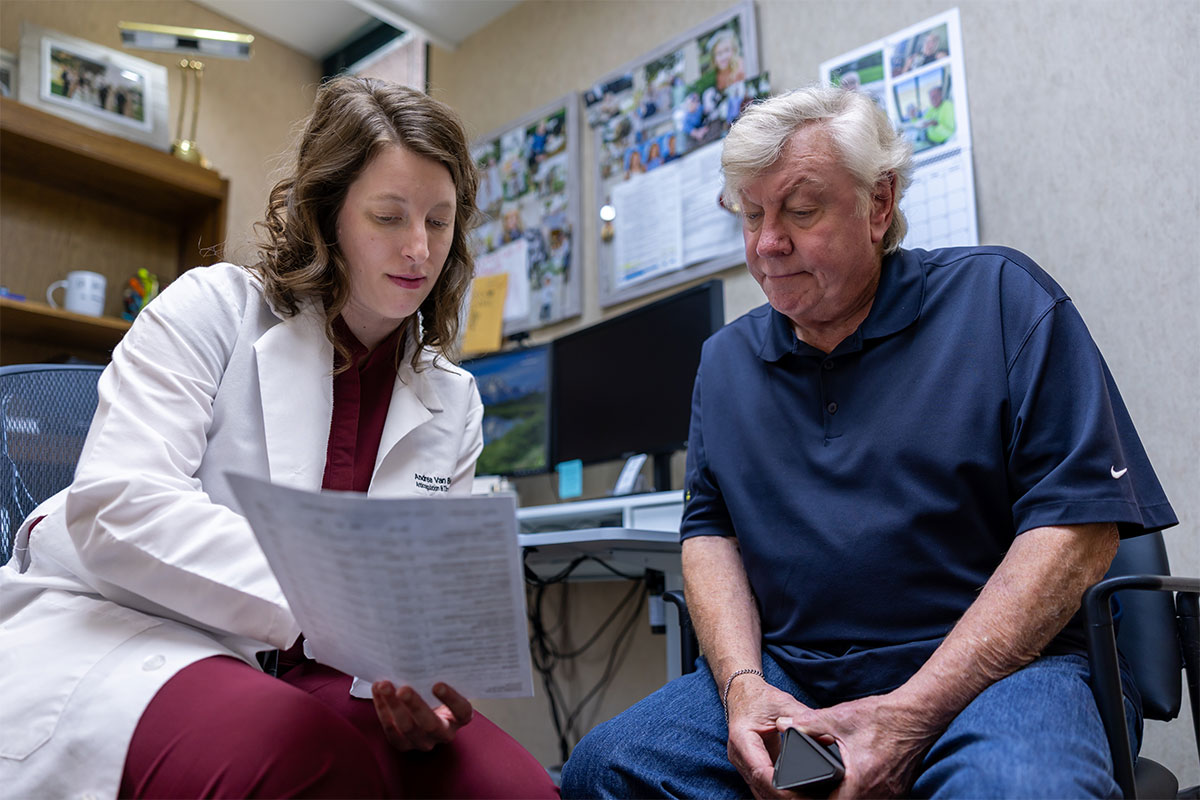
When Visalia Medical Clinic - Adventist Health Physicians Network hosts its second annual Clot Walk on March 21, Andrea Van Beek, DNP, hopes stories like Ethan Samples’ will inspire others to better understand the warning signs of dangerous blood clots.
Van Beek, who specializes in anticoagulation and thrombosis care, works closely with patients at risk for venous thromboembolism (VTE) — blood clots that can travel through the bloodstream and become life-threatening. One of those patients is 75-year-old Visalia resident Ethan Samples, who has survived two pulmonary embolisms.
“Blood clots can happen to anyone, often when they least expect it,” says Van Beek. “Education, early recognition of symptoms, and proper treatment can save lives. That’s why events like the Clot Walk are so important for our community.”
Samples knows that reality firsthand.
Sitting on his couch in 2004, struggling to breathe, is how he remembers the painful warning sign of his first pulmonary embolism (PE). A PE occurs when a blood clot — often originating in the leg — travels to the lungs. In Samples’ case, the clot formed after he broke his leg in a fall and the blood clot traveled to his lungs, restricting his breathing. He was rushed to the hospital and placed on blood thinners.
Nearly two decades later, in 2021, Samples returned to the emergency room with sudden shortness of breath and stabbing chest pain that intensified with deep breaths — classic warning signs of a pulmonary embolism. The diagnosis was sobering: a second pulmonary embolism, and unlike the first, there was no clear explanation for why it had occurred.
“I take blood thinners twice a day and will need to take them for the rest of my life,” says Samples. “If I fail to take them, my blood will thicken, making it impossible for blood to flow through my veins, and I could have another blood clot, which could be fatal.”
Samples’ internal medicine provider, Candice Lovelace, DO, referred him to Van Beek for specialized care. Since then, Van Beek has monitored his condition closely, reviewing medications and lab work, helping him stop his blood thinner for surgery, and checking in regularly to ensure he has not experienced falls or head injuries that could complicate anticoagulation therapy.
“Andrea is extremely knowledgeable in her craft,” says Samples. “Twice a year, we discuss my medications and she follows up to make sure I haven’t experienced any falls or head injuries. She’s very personable and cares about my well-being.”
After establishing care with Samples, Van Beek invited him to participate in the clinic’s first Clot Walk in 2025 — a community event designed to raise awareness about the life-threatening risks of blood clots and the importance of prevention and treatment.
“It was a great turnout,” says Samples. “My wife and I attended the Clot Walk, and we completed several laps around the clinic. My wife is very supportive of my condition. She wants to keep me alive.”
The couple plans to attend the 2nd Annual Clot Walk on Saturday, March 21.
“It’s important for others to know that a PE can lead to serious, even life-threatening complications that affect both your physical and mental health,” says Samples. “My grandmother died from a pulmonary embolism. It’s something I had never thought about but it was a real wake-up call.”
According to the CDC, an estimated 900,000 people in the United States are affected each year by venous thromboembolism (VTE), which includes pulmonary embolism and deep vein thrombosis (DVT). People are at particularly at high risk during or after hospitalization, surgery, cancer treatment, and during or following pregnancy. Many cases can be prevented with simple but important steps, such as getting up and moving as soon as it’s safe to do so, using blood-thinning medications when appropriate, and for some patients, specialized compression devices that help keep blood flowing in the legs.
Van Beek emphasizes that personalized care is critical.
“Every patients risk factors are different,” says Van Beek. “Working closely with your provider to develop the right prevention and treatment plan can significantly reduce complications and save lives.”
Know the signs
Signs of a Pulmonary Embolism:
- Sudden shortness of breath
- Sharp, stabbing chest pain that may worsen with deep breaths
- Rapid heart rate
- Coughing up blood
Call 911 immediately if you experience any of these symptoms.
Signs of Deep Vein Thrombosis (DVT):
- Swelling, usually in one leg (or arm)
- Leg pain or tenderness, often described as a cramp
- Reddish or bluish skin discoloration
- Leg (or arm) warm to the touch
Contact your provider immediately if you experience these symptoms.
Treatment options
Treatment for VTE typically involves anticoagulant medications to prevent blood clots from growing. If a clot is large or dangerous, medication can be used to dissolve it. Procedures can also help break down or remove a clot.
Register for the 2026 Clot Walk at Visalia Medical Clinic on March 21.